Rosenberg Institute Seminar Series - Sarah Mesnick
Overview
Sarah Mesnick, PhD, Ecologist and Science Liaison, Southwest Fisheries Science Center, National Marine Fisheries Service, National Oceanic & Atmospheric Administration (NOAA) and Adjunct Professor, Scripps Institution of Oceanography, UC San Diego
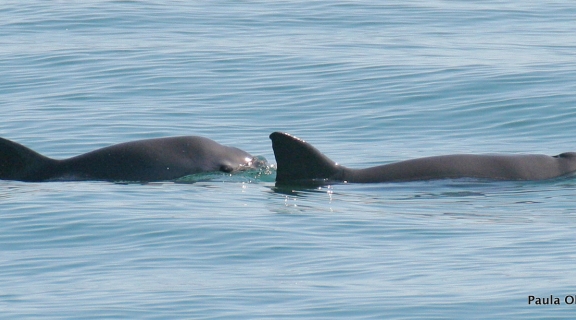
The challenges of saving Mexico’s vaquita porpoise
Abstract: The Upper Gulf of California is a diverse and highly productive ecosystem supporting some of the most important fisheries in Mexico, yet a history of weak fisheries management and illegal fishing threaten the area’s biodiversity and undermine human well-being in the communities along its shores. The vaquita (Phocoena sinus) is endemic to these waters and is on the brink of extinction due to incidental entanglement in gillnets used in small-scale fisheries. Although gillnets are banned by the government of Mexico in the vaquita’s range, their use is driven by valuable shrimp and finfish fisheries, and a lucrative black market for swim bladders of totoaba (Totoaba macdonaldi). There is long-standing lack of support for development and implementation of alternative fishing gear and livelihoods. A recent effort to deploy anti-gillnet devices (concrete blocks with hooks designed to entangle gillnets) has bought crucial time. The complexity of the economic, social, technical, and policy issues in the region requires a holistic, multidisciplinary approach in order to find regionally relevant solutions for saving the vaquita and supporting local fishing communities. The presentation will review the biology and plight of the vaquita, present abundance estimates from the latest field efforts, and summarize conservation actions with a focus on efforts to develop alternative fisheries with the local fishing communities. Sustained actions to support legal fishers able to make a good living – with a direct stake in healthy marine ecosystems – are key components of conservation policy. The situation in the Upper Gulf of California is dire, yet similar threats to other endangered species and the well-being of coastal communities may benefit from the experience of the vaquita. Recent observations of the few remaining healthy vaquitas and calves provide hope and heighten the imperative to act.
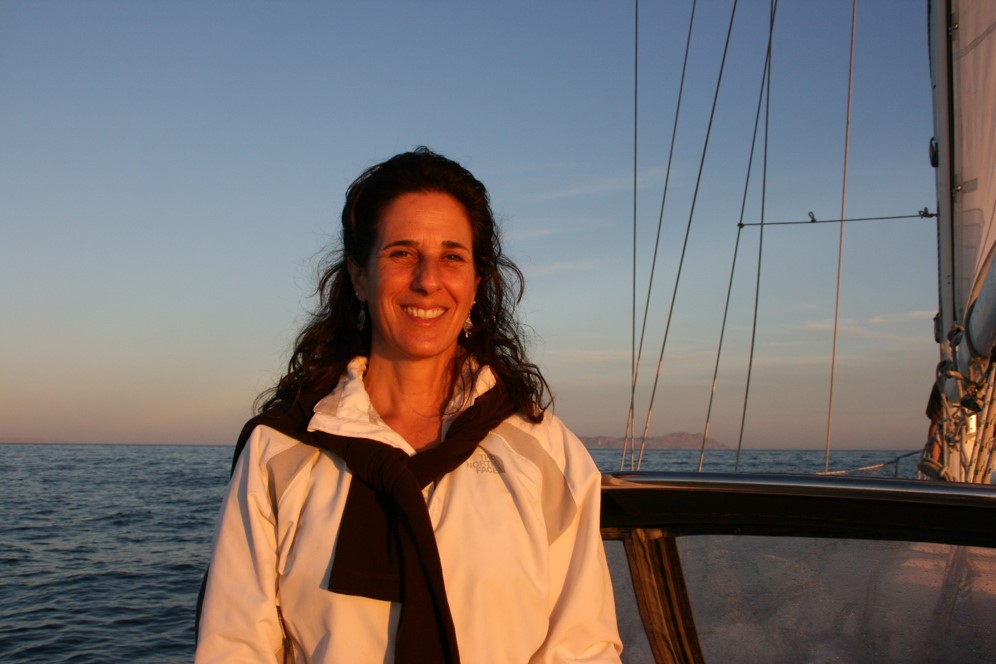
Bio: Sarah Mesnick is an ecologist and communication strategist at NOAA Fisheries’ Southwest Fisheries Science Center in La Jolla, CA. Her work integrates behavioral ecology, conservation science, and human dimensions to advance the protection and management of marine mammals, with a particular focus on mitigating fishery interactions and improving conservation outcomes. Her behavioral work spans a diversity of species (eastern tropical Pacific dolphins, beaked whales, sperm whales and blue whales), addressing a range of topics including social and population structure, conservation behavior, sexual selection and speciation and the use of behavioral traits to define units-to-conserve. In recent years, her research has increasingly centered on human dimensions of conservation, particularly in relation to the vaquita porpoise - the world’s most endangered marine mammal. She collaborates with scientists, government agencies, conservation organizations, fishing cooperatives and the seafood supply chain to advance multi-disciplinary, multilateral approaches that address illegal fishing while supporting local communities. Sarah serves on the international recovery team for vaquita (CIRVA), the International Whaling Commission’s (IWC) Expert Panel on Bycatch Mitigation, and the United Nations Environmental Program Convention on Migratory Species’ (CMS) Expert Working Group on Culture and Social Complexity. She is an adjunct professor at Scripps Institution of Oceanography, UC San Diego, and founding member of the Center for Marine Biodiversity and Conservation, where she leads the joint Sustainable Seafood Initiative. She was born and raised in the San Francisco Bay Area, received her bachelor’s from UC Santa Cruz and her PhD in Ecology and Evolutionary Biology from the University of Arizona.
Tags